{{ 'fb_in_app_browser_popup.desc' | translate }} {{ 'fb_in_app_browser_popup.copy_link' | translate }}

{{ 'in_app_browser_popup.desc' | translate }}

New Color Release

Your Shopping Cart is empty.
{{ (item.variation.media ? item.variation.media.alt_translations : item.product.cover_media.alt_translations) | translateModel }} {{ (item.variation.media
                    ? item.variation.media.alt_translations
                    : item.product.cover_media.alt_translations) | translateModel
                }}
{{ 'product.bundled_products.label' | translate }}
{{ 'product.bundle_group_products.label' | translate }}
{{ 'product.buyandget.label' | translate }}
{{ 'product.gift.label' | translate }}
{{ 'product.addon_products.label' | translate }}
{{item.product.title_translations|translateModel}}
{{ field.name_translations | translateModel }}
  • {{ childProduct.title_translations | translateModel }}

    {{ getChildVariationShorthand(childProduct.child_variation) }}

{{ 'product.set.open_variation' | translate }}
  • {{ getSelectedItemDetail(selectedChildProduct, item).childProductName }} x {{ selectedChildProduct.quantity || 1 }}

    {{ getSelectedItemDetail(selectedChildProduct, item).childVariationName }}

{{item.variation.name}}
{{item.quantity}}x NT$0 {{ item.unit_point }} Point
{{addonItem.product.cover_media.alt_translations | translateModel}}
{{ 'product.addon_products.label' | translate }}
{{addonItem.product.title_translations|translateModel}}
{{addonItem.quantity}}x {{ mainConfig.merchantData.base_currency.alternate_symbol + "0" }}

Little-known detail on hiking packs — the load lifters


This time, we’re going to talk about the “load lifters” — a feature that further reduces stress on your shoulders. These simple straps are truly the secret weapon that makes a framed hiking backpack perform at its best.

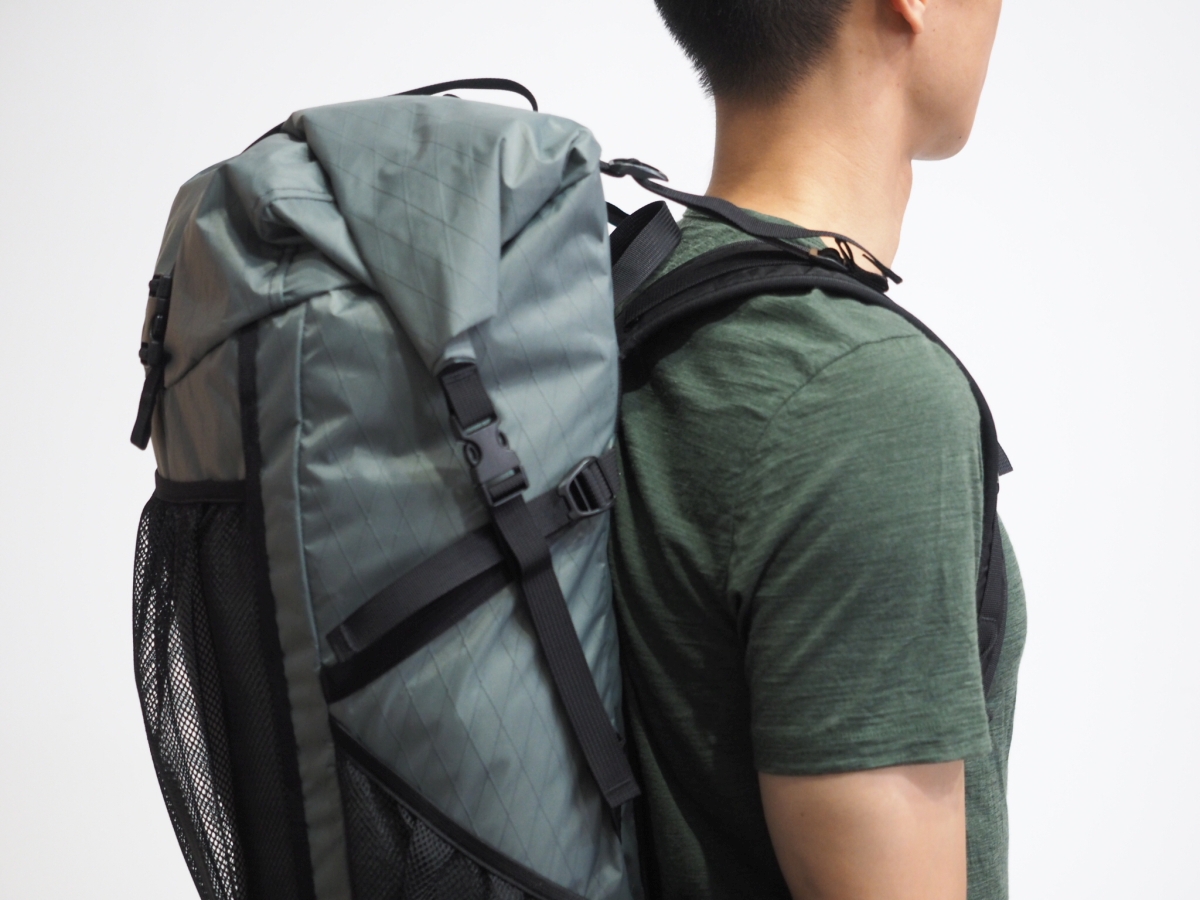
As shown in the image above, framed hiking backpacks are often equipped with small adjustable straps that run from the top of each shoulder strap to the frame — these are called load lifters (sometimes referred to as stabilizer straps or even gravity adjusters). They earned that nickname because when tightened in certain situations, they can pull a backpack that is leaning backward closer to your body to help it sit upright.

However, when wearing a properly-sized pack with the correct torso length, a good back-hugging fit should already be achieved even if the load lifters are completely loosened and not under tension. Under a good fit, we can fine-tune how the load is distributed between shoulders and hips by adjusting the shoulder straps, hip belt, and load lifters — but even though these adjustments change internal forces between the backpack components and parts of the body, the center of gravity of the “pack + body” system does not actually move. This explains why shifting the pack’s center of gravity is not the primary function of load lifters.

In reality, the main function of load lifters is to reduce the weight bearing down on your shoulders. Simply put, these straps connect to the frame and “lift” the shoulder straps upward — helping them stay gently contoured against your body while taking some of the downward force off your shoulders. That’s why we like to call them shoulder suspension straps.

There’s a local mountain legend of lost hikers who supposedly left footprints spaced two meters apart, said to have been “carried” through the forest by mischievous spirits. You can think of load lifters in the same way — as if an invisible force from above is helping lift the backpack off your shoulders.


For shoulder suspension straps (load lifters) to work effectively, the most important thing is choosing a framed backpack with the correct torso length. Here’s a quick recap on how to preliminarily check whether a pack fits your body:

1. When your thigh is lifted higher than 90 degrees (or when squatting), the top of your thigh marks the lowest point where the bottom edge of a properly tightened hip belt should sit.

2. After tightening the hip belt at this spot, the point where the shoulder straps attach to the pack body should sit slightly below your shoulder line.

3. At that point, the load lifter attachment points on the frame should be at least slightly higher than your shoulders.
 

The following explains how choosing different torso lengths affects the function of the shoulder suspension (load lifter) straps.

Example 1: Framed backpack with a correct torso length
(Shoulder strap attachment points sit slightly below the shoulders, and the frame extends at least slightly above the shoulders.)


In the image on the left, with the hip belt tightened at the proper height so it carries most of the pack’s weight (and kept in that position), you can see that once the shoulder straps are adjusted correctly, the backpack sits close to the back even when the load lifters are completely loosened and not under tension.

In the image on the right, after the load lifters are tightened, the upward component of their backward-angled tension helps relieve some of the downward pressure on the shoulders, allowing the hip belt to take on more of the pack’s vertical load. Meanwhile, the backward component gently pulls the pack snug against the upper back and chest, helping distribute the weight more evenly across the entire shoulder and back area.

If the connection point of the load lifters on the frame is lower, causing the orange arrow to be nearly horizontal, a greater tension is needed to relieve the downward pressure on the shoulders. However, the horizontal component of this tension may create excessive pressure on the chest and back. Conversely, if the connection point is higher—meaning the angle of the orange arrow relative to the horizontal is larger—the same horizontal component can snugly secure the pack to the chest and back, while the upward component increases, effectively reducing shoulder pressure. Therefore, a higher frame is advantageous for carrying heavier loads.
 

Example 2: Load-lifter framed backpack with a slightly long back length
(The point where the shoulder straps connect to the pack sits above the shoulders)


The left side of the above image shows that, when the hip belt is tightened at the normal height to bear most of the backpack’s weight without changing its position, the tension along the entire shoulder strap needs to be higher than that of a backpack with a normal back length to achieve a close fit to the back. Additionally, the area from above the shoulders to the rear is left unsupported, reducing the load on the upper shoulders. However, because the shoulder straps are tighter overall, there is noticeable pressure on the front part of the shoulders, and this tension also creates slightly greater pressure on the chest.

The right side of the image shows that properly adjusting the load lifters so they are tensioned toward the rear and upward produces an effect similar to that of a backpack with a normal back length. The upward component of the force helps relieve some of the pressure on the upper shoulders. However, since the chest area was already under slightly increased pressure, the horizontal rearward component further adds to the pressure on the chest.
 

Example 3: Short back-length load-lifter frame backpack
(The shoulder straps connect to the pack body significantly below the shoulders, but the frame itself sits above the shoulders)


The left image shows that with the hip belt tightened at the correct height to bear most of the backpack's weight, if the load-lifter straps are relaxed and not under tension, the backpack will tilt backward and not sit flush against the back. This can cause instability and swaying while walking.

The right image shows that tightening the load-lifter straps to a point where the backpack sits flush against the back can help share the load on the shoulders, similar to a properly sized back-length backpack. This allows comfortable carrying of considerable weight. However, because the straps must counteract the backpack’s backward tilt, the tension on the load-lifter straps will be higher than on a normal back-length backpack, causing slightly greater pressure on the chest while the back experiences less compression, making it harder to achieve proper chest-and-back snugness.

If the shoulder straps connect too low on the pack body (back length too short), the backward tilt force of the backpack may be excessive. Forcing the load-lifter straps tight in this case can create high tension, resulting in excessive pressure on the front of the shoulders and chest, and may even deform the shoulder straps or frame.
 

EX.4 Short-frame load-lifter framed backpack
(Frame positioned below the shoulders)


Left side shows the hip belt tightened at the normal height to carry most of the backpack’s weight, with its position unchanged. If the load-lifter straps are relaxed and not under tension, the backpack leans backward and does not sit flush against the back.

Right side shows that, to counteract the backward tilt of the backpack, the load-lifter straps are tightened, pulling backward and downward. This creates greater pressure on the front shoulders and chest, increases the load on the upper shoulders, and, conversely, the upward component of this tension on the frame can lift the hip belt slightly, reducing some of the weight that would normally be supported by the hips.