{{ 'fb_in_app_browser_popup.desc' | translate }} {{ 'fb_in_app_browser_popup.copy_link' | translate }}

{{ 'in_app_browser_popup.desc' | translate }}

EARLYBIRD |CAST Quick Access Camera Holster

The Best Travel Backpack

Your Shopping Cart is empty.
{{ (item.variation.media ? item.variation.media.alt_translations : item.product.cover_media.alt_translations) | translateModel }} {{ (item.variation.media
                    ? item.variation.media.alt_translations
                    : item.product.cover_media.alt_translations) | translateModel
                }}
{{ 'product.bundled_products.label' | translate }}
{{ 'product.bundle_group_products.label' | translate }}
{{ 'product.buyandget.label' | translate }}
{{ 'product.gift.label' | translate }}
{{ 'product.addon_products.label' | translate }}
{{item.product.title_translations|translateModel}}
{{ field.name_translations | translateModel }}
  • {{ childProduct.title_translations | translateModel }}

    {{ getChildVariationShorthand(childProduct.child_variation) }}

{{ 'product.set.open_variation' | translate }}
  • {{ getSelectedItemDetail(selectedChildProduct, item).childProductName }} x {{ selectedChildProduct.quantity || 1 }}

    {{ getSelectedItemDetail(selectedChildProduct, item).childVariationName }}

{{item.variation.name}}
{{item.quantity}}x NT$0 {{ item.unit_point }} Point
{{addonItem.product.cover_media.alt_translations | translateModel}}
{{ 'product.addon_products.label' | translate }}
{{addonItem.product.title_translations|translateModel}}
{{addonItem.quantity}}x {{ mainConfig.merchantData.base_currency.alternate_symbol + "0" }}

Ultralight Sleep System – The Sleeping Gear in the Big Three


On average, people spend about one-third of their day sleeping, which is a necessary process for the body to rest and recharge. Adequate and quality sleep helps with alertness and activity the next day, and hiking is no exception. Bedding takes up a significant portion of both volume and weight in a backpack. Being able to carry it lightly while staying warm is ideal. Finding a good balance between ultralight packing and sleep comfort is worth considering and studying.

When it comes to hiking bedding, the first thing that comes to mind is usually the sleeping bag, since it’s impractical to carry items like blankets and pillows on a hike. Sleeping bags are designed as portable gear. Most sleeping bags on the market indicate a recommended comfort temperature, helping hikers choose according to the environmental conditions. Hiking bedding isn’t just a single piece of gear—sleeping bags are only one part. Just as at home, besides a blanket, clothing, mattress, and air conditioning all contribute to sleep quality; on the trail, sleeping bags, sleeping pads, and other gear fulfill the same purpose to meet sleep needs.

The following mainly uses sleeping bags as an example to introduce ultralight bedding and related systems:

Traditional ultralight sleeping bags

Shape design
Traditional sleeping bags are cut to match the human body shape to reduce weight. The most common mummy-shaped sleeping bag uses minimal fabric and insulation to achieve optimal warmth.


2. Material selection
Using high-loft down with low-denier ultralight shell and lining fabrics, the higher the loft of the down, the lighter the weight needed to achieve a certain thickness, providing sufficient insulation. However, these materials are generally quite costly.


(The image above shows the KEEPON 945 sleeping bag.) The KEEPON 9 series sleeping bags are among the few high-loft down sleeping bags manufactured domestically.

Practical Tips:
Choose a sleeping bag of appropriate size so the down can fully loft without leaving excess space, achieving better insulation.
Down sleeping bags are lighter and warmer compared to synthetic ones, but moisture significantly reduces their insulation. In damp or rainy environments—especially when using shelters with limited coverage like tarps, simple tents, or small single-wall tents—it’s recommended to use a bivy sack to protect the sleeping bag from moisture.


* Ultralight sleeping bags designed with a system-based approach
Sleeping bags designed for system integration can be combined with other gear, achieving both ultralight weight and comfort through coordinated use.

1. Hoodless sleeping bag
A sleeping bag without a hood can be paired with the hood of a regular jacket, an outerwear hood, or a beanie, creating a complete sleep system.


2. Quilt-style sleeping bag
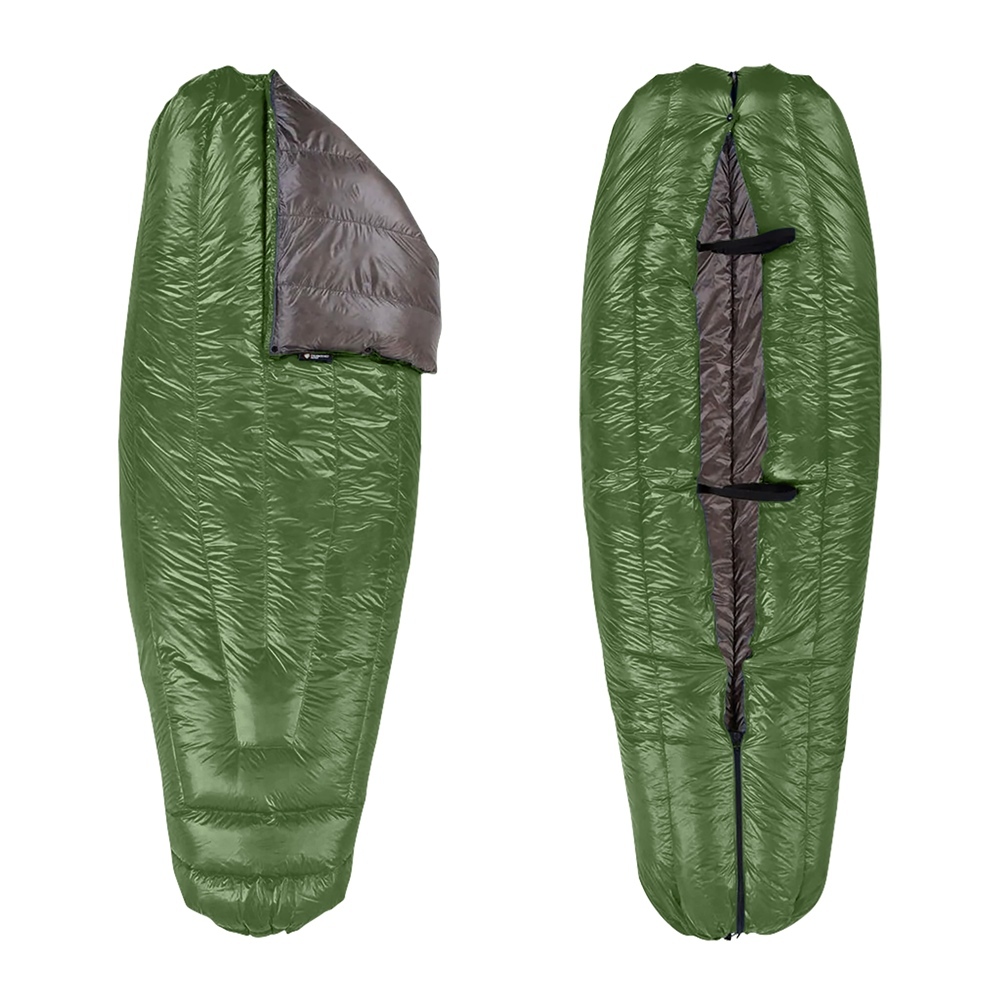
Hikers use sleeping pads to insulate against ground cold and improve warmth and comfort. During sleep, the bottom of a regular sleeping bag is compressed by body weight, reducing loft and insulation efficiency. A quilt-style sleeping bag eliminates the bottom portion of the bag, treating the "sleeping bag + sleeping pad" as a single sleep system to reduce unnecessary weight. This type of sleeping bag functions like a blanket, with design details that ensure proper coverage and secure fit, preventing cold air from entering through gaps and providing comfortable sleep.


( The image above shows the Enlightened Equipment Revelation sleeping bag )
Enlightened Equipment, a well-known U.S. ultralight sleeping bag brand, is famous for its bestselling models featuring extremely lightweight specifications, down quilts that allow quick temperature adjustment, and versatile functionality. These sleeping bags are a top choice for ultralight enthusiasts and backpackers abroad.

Practical Tips:
1. Quilt-style sleeping bags usually have several adjustment straps at the bottom. Make sure to adjust their snugness against your body to suit different climate conditions.
2. Hoodless and quilt-style sleeping bags typically lack a hood, so pay special attention to keeping your head and neck warm.

The next level of ultralight – advanced system-based thinking
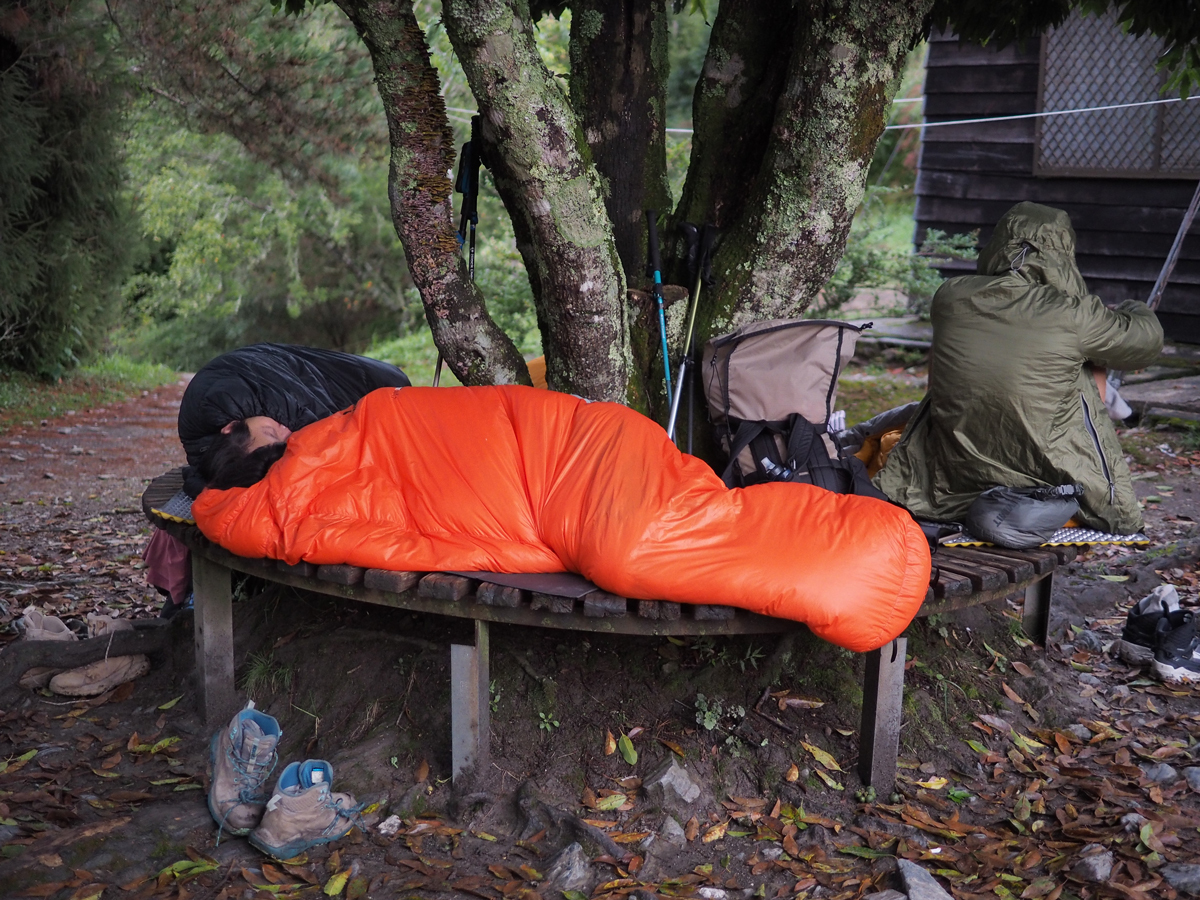
To achieve a higher level of ultralight packing, consider thinking further: the sleep system isn’t limited to just the sleeping bag and pad. Tents, insulating clothing, and other gear can also be part of the sleep system. Advanced ultralight bedding requires a systematic approach to evaluate and combine gear to create the sleep system best suited to the environment.


*Example above: Using a jacket and beanie to replace the hood of a traditional sleeping bag, clothing packed into a stuff sack as a pillow, a half-length sleeping pad for upper body insulation, and the backpack as insulation support for the lower body.

Practical Tips:

  1. Make full use of all carried items to complete the sleep system.

  2. Carry a half-length sleeping pad for upper body insulation; use the backpack or other items for lower body insulation.

  3. Use a warm hat as the hood for a hoodless sleeping bag.

  4. The backpack back panel can serve as part of the sleeping pad.

  5. Pair a lighter sleeping bag with all insulating clothing to achieve sufficient warmth.

  6. Place some clothing in a stuff sack to use as a pillow.

  7. Record various gear combinations and compare them to your comfort temperature for future reference, carrying the appropriate level of warmth.

  8. In damp environments, consider using synthetic products.