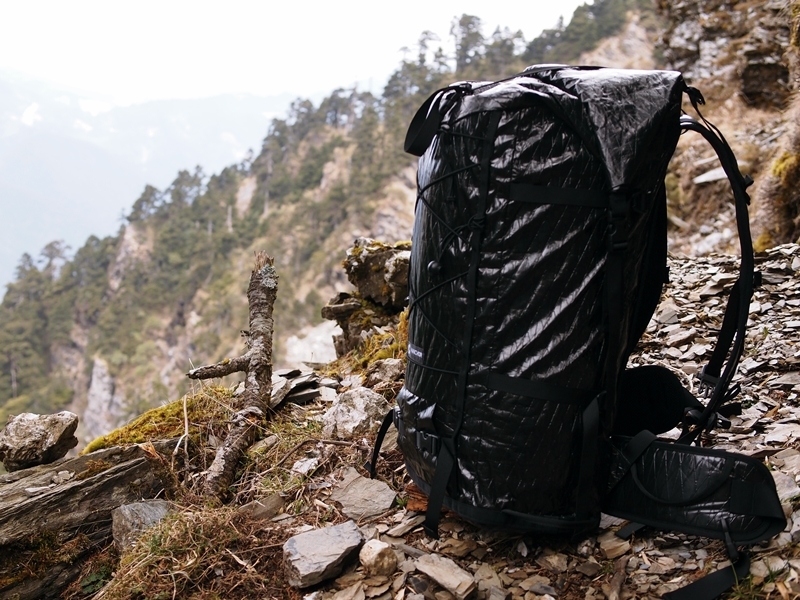
The main difference between a hiking backpack and a regular daily-use backpack lies in the carrying system. Hiking backpacks are designed for multi-day trips with heavier loads, equipped with a suspension system that transfers most of the weight to the waist and core, instead of relying solely on the shoulders.
Here’s the problem: without a basic understanding of how to carry a backpack, even the best pack won’t perform as intended. On heavy-load trips, this can quickly lead to soreness and pain, and once you get home, it could feel even worse. Before setting off, always check if your pack is properly adjusted and comfortable—this is key to ensuring an enjoyable hike.
So, how should you carry a backpack? The adjustments focus on three main elements:
1. Fasten the hip belt
2. Adjust the shoulder straps to fit snugly
3. Fine-tune the load lifters and sternum strap
Before putting on a heavy pack.
Lift it onto your knee first for better leverage.
1. Fasten the hip belt
Although we call it a “backpack,” the secret lies in the waist. The core and hips are far stronger than the shoulders, and about 70% of the pack’s weight should be supported by a tightened hip belt. The belt should wrap around the iliac crest (the top of your hip bones), effectively transferring weight to your lower body.
Tip: When tightening, press one side of the belt with your hand to prevent the pack from rotating, making it easier to pull snug.
To ensure freedom of movement, tighten the hip belt while squatting or raising your knee as high as possible—the lower edge of the belt should rest just above the thigh, without restricting hip movement.
2. Adjust the shoulder straps to fit snugly
Everyone’s body is different, and even a backpack with the right torso length may not perfectly match your shoulder shape. Ideally, once tightened, the straps should contour naturally along your shoulders and upper back.
If the torso length is too long: the straps won’t sit flush, and tightening them may cause uncomfortable pressure on your chest.
If the torso is too short: the weight won’t transfer effectively to the hips, and loosening the straps will cause the pack to lean backward.
Thus, torso length is one of the most important factors when choosing a suspension system.
3. Adjust the load lifters and sternum strap
Most packs feature load lifter straps at the top of the shoulder straps. Their function is to adjust the pack’s angle and bring the center of gravity closer to your body, reducing shoulder strain. Tightening brings the pack upright and parallel to your body; loosening creates more backward lean.
The sternum strap, located between the two shoulder straps, stabilizes them across the chest, keeping the pack snug and reducing side-to-side sway. This is especially useful during more dynamic movement, ensuring the pack moves as one with your body.
Torso length definition:
Measured from the bony bump at the base of your neck (C7 vertebra) down to the midpoint of the iliac crest (top of the hip bones). With the hip belt properly tightened (lower edge resting just above the thigh when squatting), the shoulder strap anchor point should sit slightly below the shoulders, and the load lifter anchor should sit slightly above.
These three adjustments form the foundation of a comfortable carry. Other factors—such as pack weight, packing method, and activity type—also affect comfort. Finding the right backpack requires some research and testing. Once you know your body and habits, and match them with the right pack, you’ll enjoy a much more comfortable and enjoyable outdoor experience.