{{ 'fb_in_app_browser_popup.desc' | translate }} {{ 'fb_in_app_browser_popup.copy_link' | translate }}

{{ 'in_app_browser_popup.desc' | translate }}

Earlybird|Lightweight Duffel Backpack

The Best Travel Backpack

經典素黑回歸!最棒的旅行背包

Your Shopping Cart is empty.
{{ (item.variation.media ? item.variation.media.alt_translations : item.product.cover_media.alt_translations) | translateModel }} {{ (item.variation.media
                    ? item.variation.media.alt_translations
                    : item.product.cover_media.alt_translations) | translateModel
                }}
{{ 'product.bundled_products.label' | translate }}
{{ 'product.bundle_group_products.label' | translate }}
{{ 'product.buyandget.label' | translate }}
{{ 'product.gift.label' | translate }}
{{ 'product.addon_products.label' | translate }}
{{item.product.title_translations|translateModel}}
{{ field.name_translations | translateModel }}
  • {{ childProduct.title_translations | translateModel }}

    {{ getChildVariationShorthand(childProduct.child_variation) }}

{{ 'product.set.open_variation' | translate }}
  • {{ getSelectedItemDetail(selectedChildProduct, item).childProductName }} x {{ selectedChildProduct.quantity || 1 }}

    {{ getSelectedItemDetail(selectedChildProduct, item).childVariationName }}

{{item.variation.name}}
{{item.quantity}}x NT$0 {{ item.unit_point }} Point
{{addonItem.product.cover_media.alt_translations | translateModel}}
{{ 'product.addon_products.label' | translate }}
{{addonItem.product.title_translations|translateModel}}
{{addonItem.quantity}}x {{ mainConfig.merchantData.base_currency.alternate_symbol + "0" }}

Ultralight Packing – The Backpack in the Big Three


In the hiking community, backpacks, shelters, and sleep systems are often referred to as the “Big Three.” These three pieces usually make up the bulk of both volume and weight, which is why starting with them when going lightweight yields the greatest benefits. Before diving into the details of ultralight packing and storage, let’s first challenge a few common assumptions in traditional backpacking:

1.    Backpack base weight doesn’t matter?
Traditional backpacks are designed for comfort under heavy loads, often using thick foam padding and sturdy frames. This can easily push the empty pack weight to 2–3 kg, sometimes even 3–4 kg. While they may carry weight comfortably, extra kilos are still extra kilos — they add to the strain on your body. In contrast, a well-designed lightweight pack, using modern materials and a streamlined build, combined with smart packing techniques and conscious gear selection, can achieve both comfort and reduced weight.

2.    Backpacks should be the last step toward going lightweight ?
Since the backpack is the first of the Big Three, choosing the right one is often the first real decision for beginners. It’s like choosing a car — the model depends on the intended use. For daily commuting, you’d pick a fuel-efficient sedan, not a nine-seater van. Similarly, selecting a backpack should be based on your hiking goals, load expectations, and comfort preferences.

 
Entering the hiking world — Choosing the right backpack

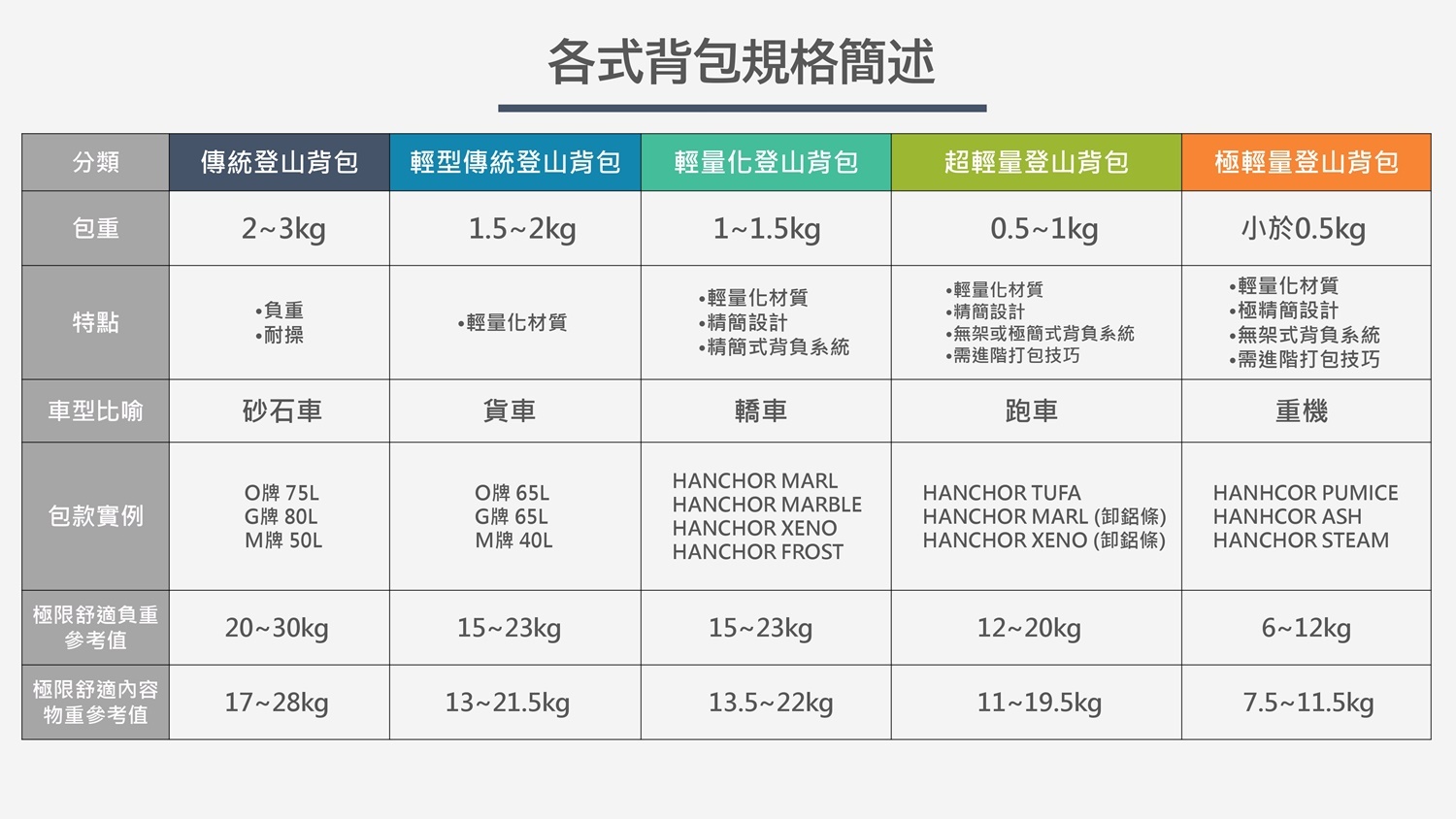
Backpack choice depends on your trip length, experience, and skills. But regardless of those factors, for a typical load of 12–15 kg, the difference in base weight between a lightweight pack and a traditional pack can already account for more than 10% of your total load. That impact is significant.

Before settling on a pack, it’s helpful to review the features and characteristics of packs across different weight classes, then match them with your style, trips, and abilities.


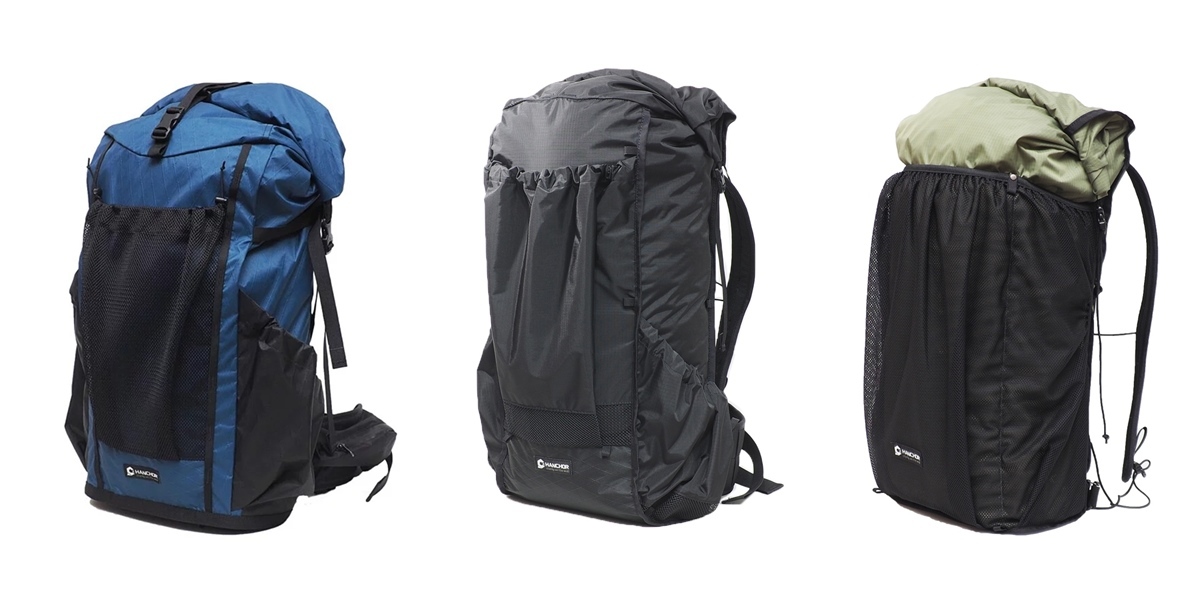
In addition to material differences, ultralight backpacks achieve further weight reduction through more streamlined designs, frameless carrying systems, and advanced packing techniques.
( Left - MARL backpack, base weight 1053g ) ( Center - TUFA backpack, base weight 733g ) ( Right - PUMICE backpack, base weight 422g )


Frameless Ultralight Backpack – Virtual Frame Packing Method

The difference between ultralight backpacks and traditional backpacks, aside from materials, lies heavily in their simplified designs. To achieve even greater weight reduction, we often use frameless backpacks and apply specific packing techniques to approximate the carrying performance of traditional packs. Simply put, this means using other gear you carry to build a virtual frame that functions as the support system.

1. Organize loose items:
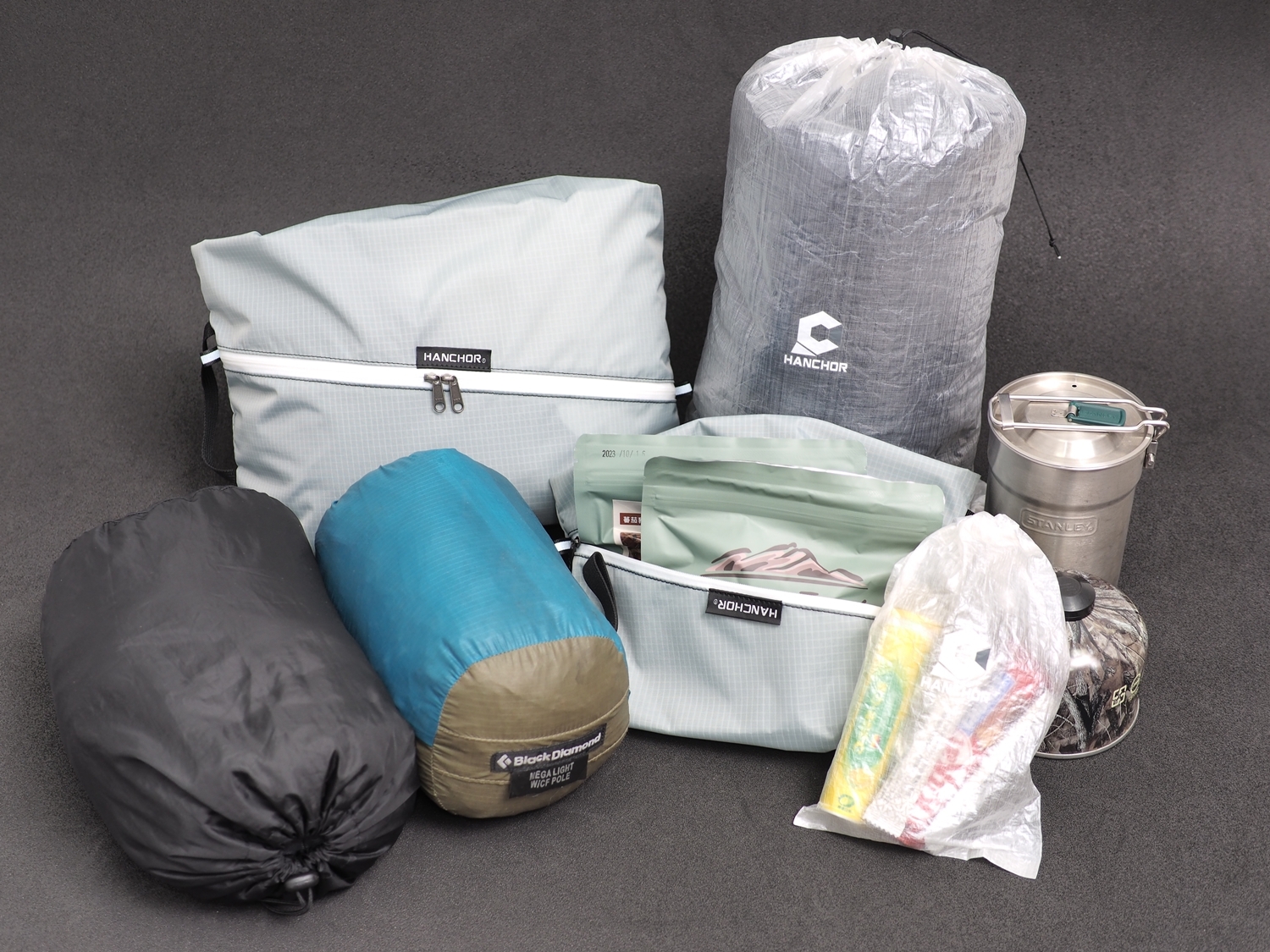
Use stuff sacks or plastic bags to consolidate small loose items. This is especially important for ultralight backpacks with fewer compartments due to their minimalist design. Doing so not only reduces the frustration of losing track of items but also makes the subsequent packing process much smoother.


2. Choosing the foundation for the virtual frame:
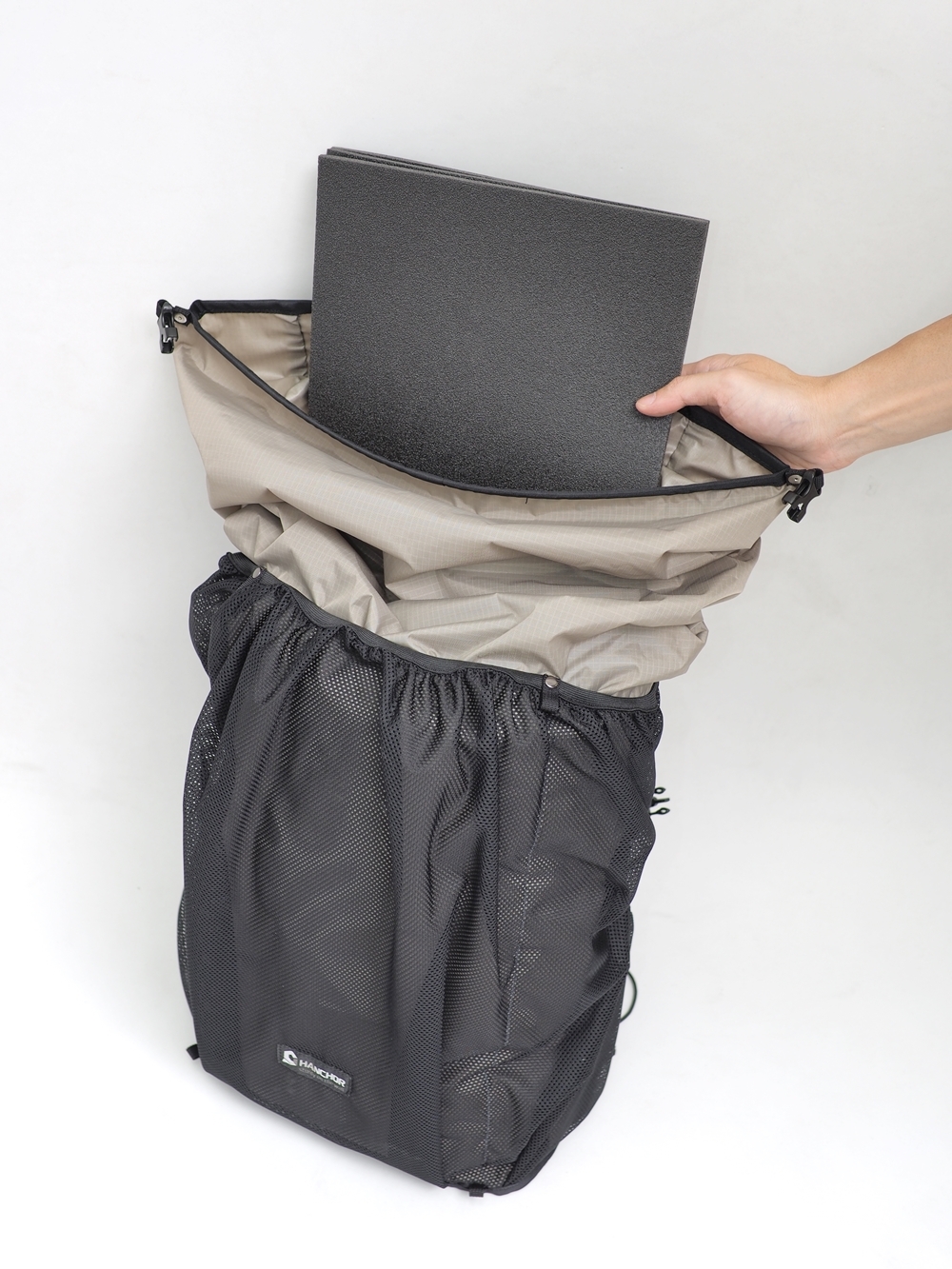
For overnight hiking trips, a sleeping pad that provides insulation and comfort is often carried, and it works perfectly as the foundation of a virtual frame. Try placing it flat against the back panel of your pack, or roll it into a cylinder to line the inside. This essentially serves as a soft back panel. With careful packing to keep this soft panel firm and rigid, you can achieve carrying performance close to that of a traditional framed backpack!


3. Packing items not needed on the trail, using long objects to support the virtual frame:
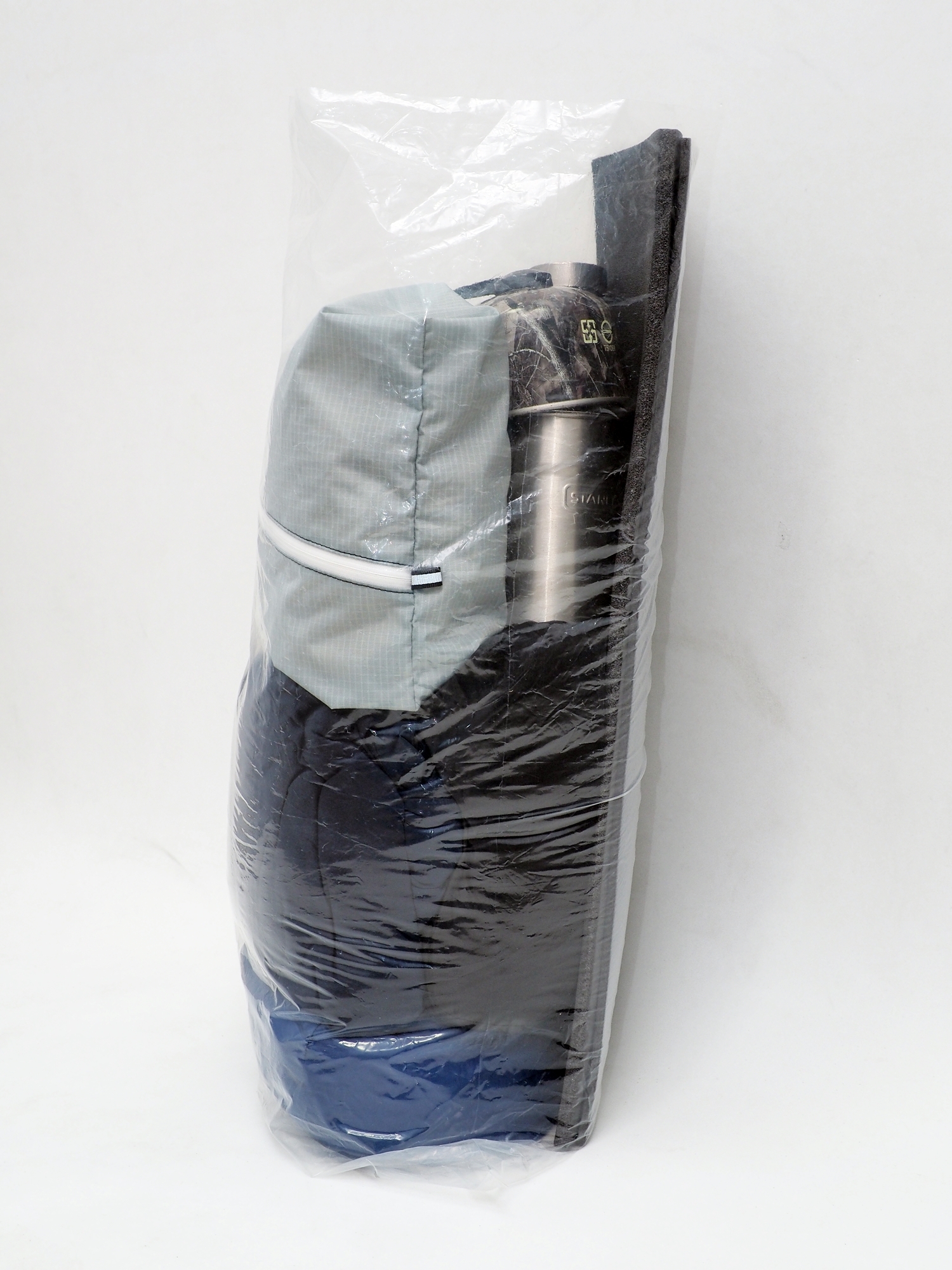
It is generally recommended to first insert a large waterproof liner (such as a big plastic bag) inside the backpack before packing. Then, place the items you won’t need while hiking in order. To keep the pack’s center of gravity close to your back, start by placing low-density, bulky items (like a sleeping bag) at the bottom. Next, position denser and heavier items (such as fuel, water, food) against the back panel, while placing lower-density items (like insulating clothing) toward the front to maintain the load’s balance near your back. Don’t forget to place long, rigid items (like water bottles or tent poles) along the sides of the back panel to reinforce the virtual frame.

Tips:
a. Use a bivy sack or groundsheet as the internal waterproof liner—multi-use items help reduce weight.
b. Pack bulky items like sleeping bags and clothing without stuff sacks so they can naturally fill gaps between other items, giving the backpack a more solid and comfortable shape.
c. Since frameless packs lack the rigid back panel of traditional backpacks, pay attention to keeping the back side flat and smooth when packing.
d. Items that don’t need waterproofing can be placed outside the liner.


4. Packing gear needed during the hike according to frequency of use:
Whether ultralight or not, packing order is an art. Organizing items by frequency of use and trip schedule will save you a lot of trouble when accessing gear. At the same time, don’t forget to consider maintaining a stable center of gravity.

Tips
a. Items you might need while hiking can be placed in the external mesh pockets, so the main compartment doesn’t need to be opened until reaching camp.
b. After packing, roll the top of the waterproof liner a few times—this provides sufficient waterproofing for various weather conditions, eliminating the need for a rain cover.
c. Remember the placement of items, especially essentials like rain gear and headlamps that may be needed in emergencies.


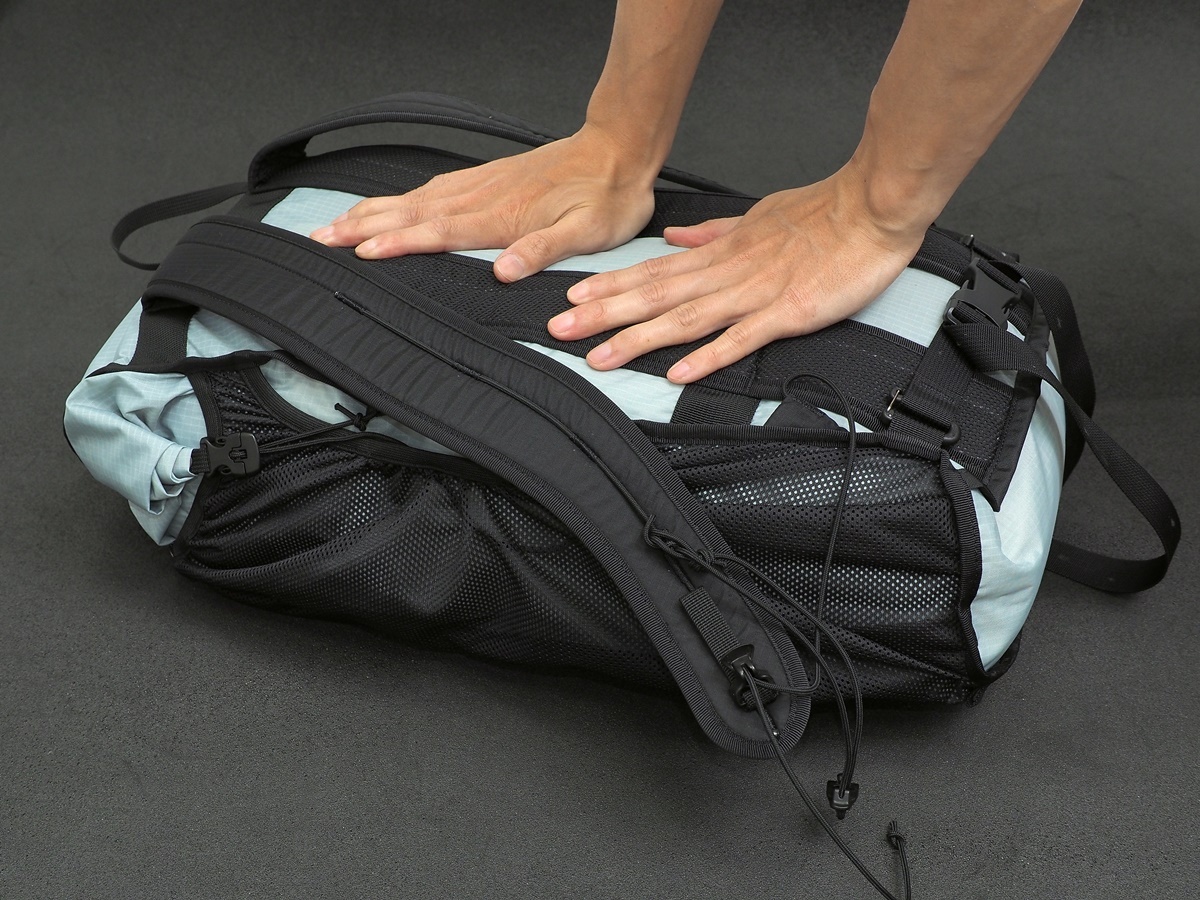
5. Proper compression and back panel adjustment to complete the virtual frame:
Once all your gear is packed, the final step is to compress your backpack appropriately so it becomes firm and stable. Then, smooth out the back panel so it aligns comfortably with your back shape. This way, your pack will function much like a traditional framed backpack, effectively transferring weight to the hip belt—allowing you to enjoy lightweight and comfortable hiking!


In summary, every type of backpack has its pros and cons, and the choice should be based on your trip, personal skills, and needs. As the initial table metaphor illustrated, driving a truck to a convenience store or riding a heavy motorcycle in the rain are relatively unsuitable actions. For longer trips, excessive ultralight packing at the expense of essential gear is counterproductive. Therefore, it’s important to learn from each trip and gradually refine your ultralight techniques, which will ultimately provide a more comfortable and safe hiking experience!