
Avoiding getting lost on the trail is essential knowledge for every hiker. Learning to read offline maps is undoubtedly an effective way to reduce the risk of losing your way.
Does reading maps seem difficult? Some people might feel intimidated. But if you can already navigate using trail markers on the mountain, just think of it this way: “Reading an offline map = transferring the skill of reading trail markers onto your phone.” Doesn’t that feel more approachable?
This article provides a basic guide to using offline maps, which can greatly reduce the risk of getting lost on the trail once mastered.
Q. Why use offline maps
When hiking, you may encounter poor or no mobile signal. Online maps that require internet access (e.g., Google Maps) won’t work in these situations. Therefore, downloading offline maps in advance allows you to determine your location even without network coverage.
Q. How offline maps determine direction
To use offline maps, you need a smartphone and pre-downloaded offline maps. Most smartphones have GPS (Global Positioning System), which can determine your location using satellite signals. GPS works without network or mobile signals. By opening a pre-downloaded offline map on the mountain and using GPS, your current position will be displayed on the map, allowing you to confirm whether you are deviating from the trail.

◼️ Offline Map Usage Guide
Here we use the app HikingBook as an example tutorial (the app is free to download).
After opening the app, tap [Explore] and enter the name of the trail you want to find in the search bar (e.g., Nenggao–Andongjun). You can choose an offline map to download from either [Official Routes] or [Hiking Activities].
Note: [Hiking Activities] are GPX track files uploaded by other hikers. Routes may vary, so you can select the map data that best suits your needs.

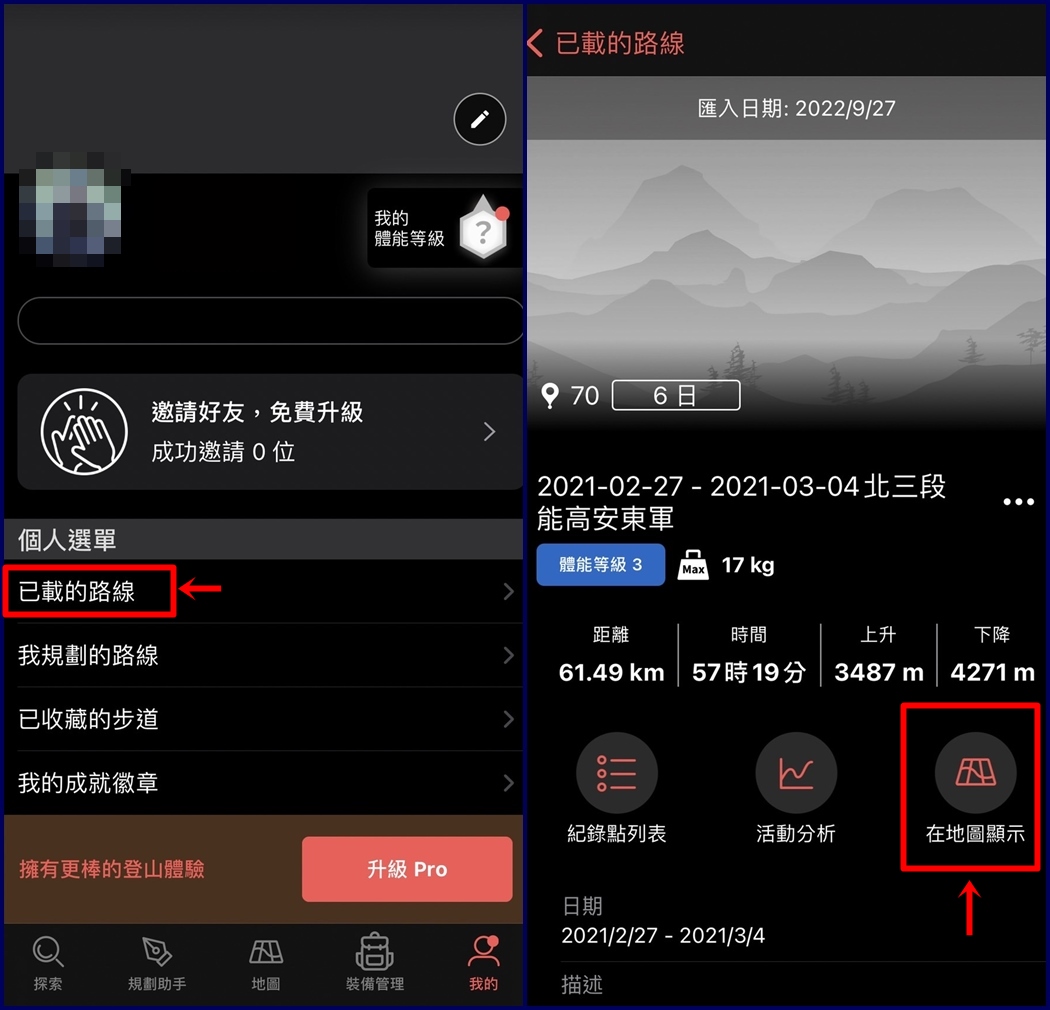
After downloading, go to [My] > [Downloaded Routes] to see your offline maps. Tap a route, then select [Show on Map] to display the offline map.
When you open the offline map on the mountain, your current location will appear as a blue arrow on the map, allowing you to check whether you are staying on the trail.

◼️ Some Tips
When first opening the map, GPS may have slight inaccuracies (location may drift). Wait about 5–10 seconds for the GPS signal to stabilize before confirming your position.
Turn off mobile data and Bluetooth, and enable airplane mode to save battery life.
The above covers the most basic directional function of offline maps. Once mastered, it provides an additional layer of safety against getting lost on the trail. There are many more detailed features and tutorials for offline maps available online, and it’s recommended to explore and learn them as well!


